Time Migration / Greenfinch

Project details

Commissioner: Kuwait Industries Union
Artist: Alan Williams
Year: 2017
Project type: International public / cultural sculpture
Subject: Greenfinch
Setting: Al Shaheed Park, Kuwait
Exhibition: Kuwait Industries Union Fourth Expo
Exhibition dates: 19–21 November 2017
Theme: Bridges
Dimensions: Approx. 220 × 140 × 130 cm
Materials: Forged steel, reclaimed tools, car clutches, motorcycle sprockets and chain, with laser-cut architectural elements
Finish: Galvanised for outdoor display
Format: Freestanding sculpture
Base: Sculptural plinth constructed from vertical RSJs
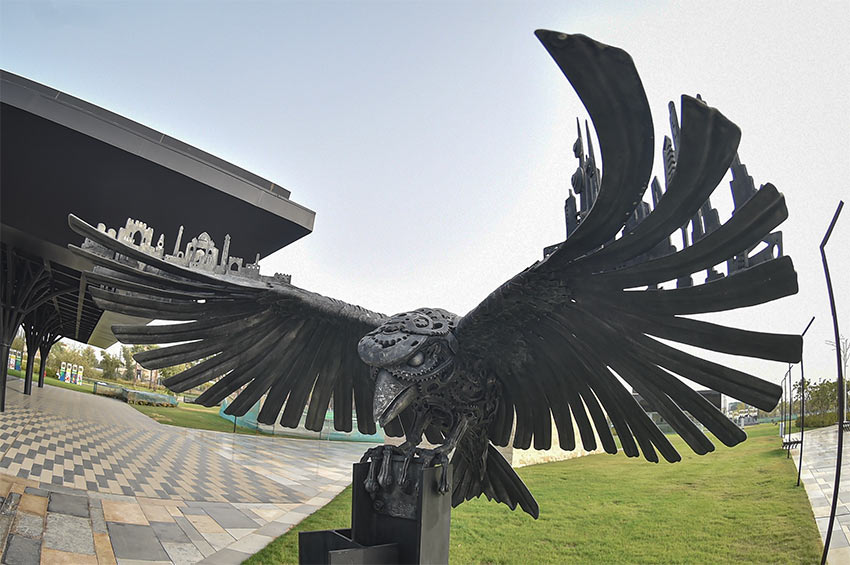
Time Migration Greenfinch sculpture by Alan Williams at Al Shaheed Park in Kuwait

Kuwait Industries Union commissioned Alan Williams to create Time Migration, a large Greenfinch sculpture for its fourth Expo at Al Shaheed Park in Kuwait in 2017.

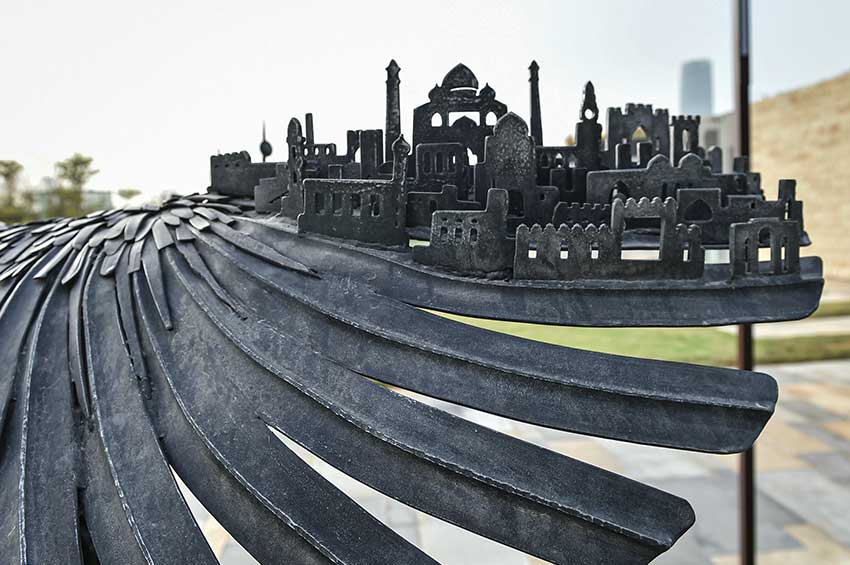
The exhibition theme was Bridges, looking at connections between people, culture, industry, art and different generations. Alan developed the bird around that idea, using the wings to carry references to Kuwait’s built environment.

One side drew on older Kuwaiti architecture. The other looked towards the contemporary city.

The finished sculpture combined forged steel with reclaimed tools, car clutches, motorcycle sprockets, chain and laser-cut architectural elements. It measured approximately 220 × 140 × 130 cm and was galvanised for outdoor display.
A sculpture for Kuwait

The starting point for Time Migration was not simply the bird.

Kuwait Industries Union had chosen Bridges as the theme for its 2017 Expo at Al Shaheed Park. The idea covered connections between old and new, industry and art, and different cultures and generations.

Alan used the Greenfinch as the main form and began working those ideas into the sculpture itself.

The body remained recognisably a bird, but the wings gave him somewhere to introduce another layer of information about the place it had been made for.

Early design or full view of Alan Williams’ Time Migration Greenfinch sculpture
Laser-cut Kuwaiti architectural elements in the wings of Alan Williams’ Time Migration sculpture

Building Kuwait into the wings

The two wings were developed differently.

One carried references to older Kuwaiti buildings and architectural forms. The other looked towards contemporary Kuwait.

Alan used laser-cut cityscape elements alongside the forged and reclaimed steel, allowing the architecture to sit within the structure of the wings rather than appearing as a separate decoration.

Seen from a distance, the sculpture still reads as a large bird. Closer in, those smaller references begin to appear among the mechanical material.

Making the Greenfinch

The sculpture was built from forged steel and reclaimed industrial components.

Alan used retired tools, car clutches, motorcycle sprockets and chain alongside newly worked steel.

Some components were useful because of the shape they already had. Others were cut, heated or altered before they could become part of the bird.

The mechanical material remains visible through the finished work. A sprocket still looks like a sprocket. Chain still carries the structure and movement it had before Alan used it in the sculpture.

That detail becomes easier to read as you move closer to the piece.

Reclaimed tools sprockets clutches and chain used in Alan Williams’ Time Migration sculpture
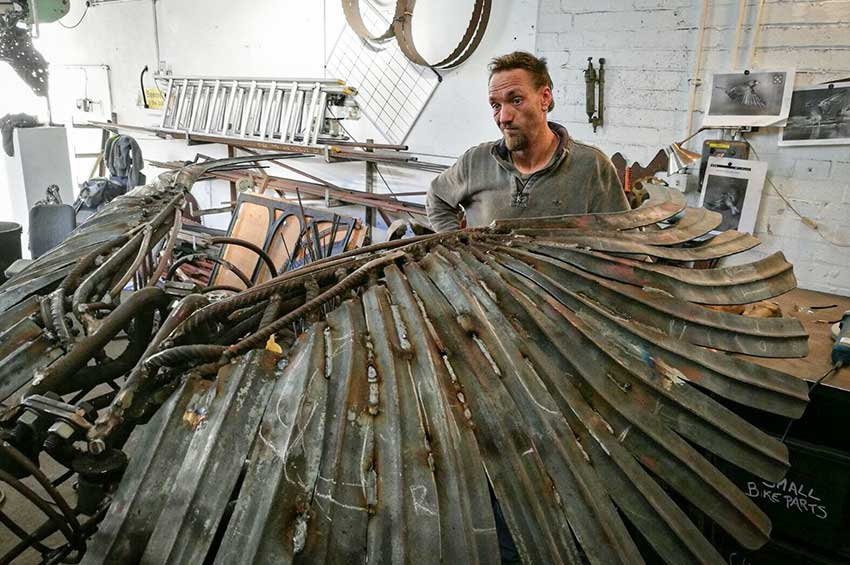
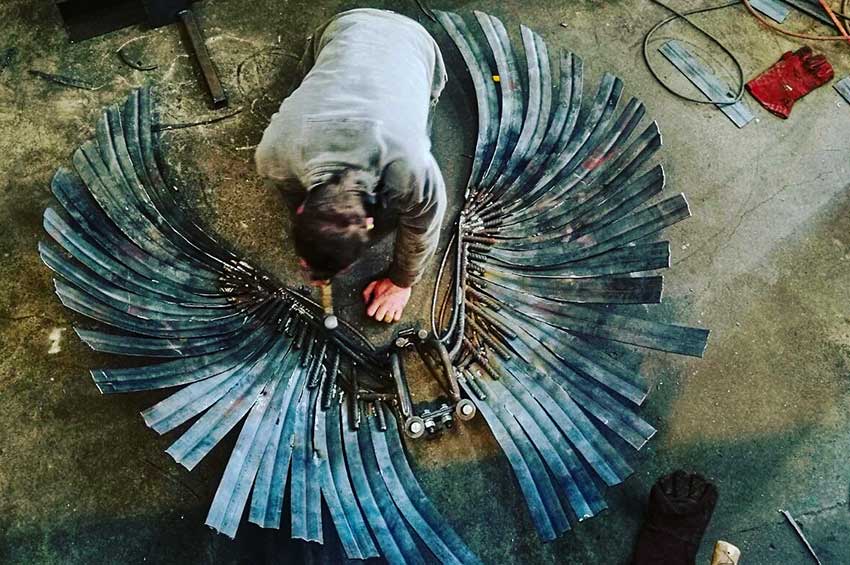
Alan Williams forging and constructing the Time Migration Greenfinch sculpture

Forging the form

The scale of Time Migration meant the overall structure had to be established before the smaller mechanical elements could begin to work across the surface.

Alan forged and shaped the steel around the body of the bird, building the larger curves and proportions first.

The reclaimed components could then be brought into the developing form where their existing shapes made sense.

The architectural sections of the wings needed a different treatment again, combining the laser-cut elements with the surrounding steel without losing the outline and movement of the bird.

Industrial material and natural form

The Kuwait Industries Union commission suited the way Alan already worked with old machinery and industrial objects.

The organisation represents manufacturing and industry, while Alan’s sculpture takes objects originally made for practical jobs and puts them into natural forms.

For Time Migration, those industrial parts became feathers, surface and structure within a bird made for an exhibition concerned with connections between different worlds.

Alan did not need to hide the original character of the components. Their previous use remains part of what can be seen.

Reclaimed mechanical and industrial components visible in Alan Williams’ Time Migration sculpture
Time Migration Greenfinch sculpture showing its galvanised steel construction and RSJ plinth

Made for an outdoor setting

Time Migration measures approximately 220 × 140 × 130 cm.

The finished sculpture was galvanised for outdoor display and mounted on a sculptural base made from vertical RSJs.

The base forms part of the work rather than behaving like a conventional pedestal. Its industrial construction also carries the material language of the bird down into the support beneath it.

At this scale, both the sculpture and its base had to work visually from further away while still allowing the smaller mechanical details to be discovered close up.

Time Migration at Al Shaheed Park

The sculpture was shown at Al Shaheed Park during the Kuwait Industries Union Fourth Expo from 19 to 21 November 2017.

Against the park and surrounding architecture, the work could be read both as a large bird and as a collection of smaller references to industry, machinery and the city around it.

The Greenfinch, the two different wings and the reclaimed mechanical material all came together within the Expo’s Bridges theme.

Time Migration Greenfinch sculpture by Alan Williams shown at Al Shaheed Park in Kuwait
© Alan Williams Metal Sculpture Artist